

Welcome guest
Monday to Friday8AM - 9PM
AddressABC A-504, Rajnigandha Apartment, VADODARA-390007, GUJARAT, India.

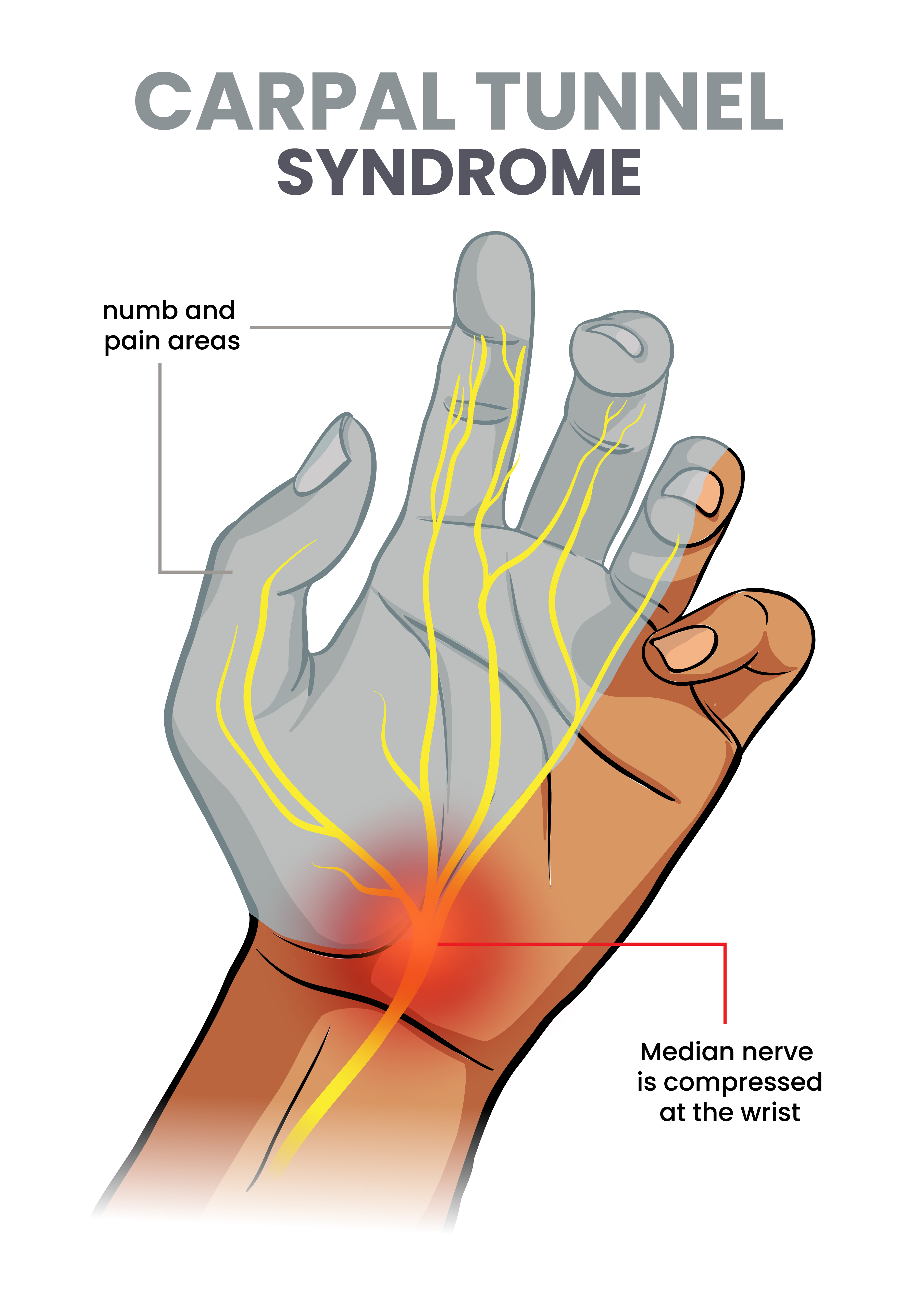
Carpal Tunnel Syndrome is a common neurological disorder that occurs when the median nerve, which runs from the forearm into the palm of the hand, becomes pressed or squeezed at the wrist.
The carpal tunnel is a narrow passageway in the wrist formed by bones and ligaments, and it houses the median nerve as well as tendons that control finger movement. The compression of the median nerve can lead to various symptoms such as pain, numbness, tingling, and weakness in the hand and fingers, particularly the thumb, index, middle, and part of the ring finger.
Here are some general classifications or types of Carpal Tunnel Syndrome based on different factors:
Below is an overview of the procedures and steps commonly taken in the evaluation and treatment of CTS:
1. Medical History and Physical Examination:
Patient History: A detailed history is obtained, including information about symptoms, their onset, and factors that exacerbate or alleviate them.
Physical Examination: A neurologist or healthcare provider examines the hand, wrist, and arm, checking for signs of muscle atrophy, weakness, and sensory abnormalities.
2. Nerve Conduction Studies and Electromyography (EMG):
Nerve Conduction Studies (NCS): These tests measure the speed of electrical impulses through the nerves. NCS can help assess the function of the median nerve in the carpal tunnel.
Electromyography (EMG): This test measures the electrical activity in muscles and can help identify nerve dysfunction and muscle damage.
3. Imaging:
X-rays or Ultrasound: Imaging studies may be performed to rule out other conditions and to evaluate the anatomy of the wrist and hand.
4. Conservative Treatments:
Wrist Splints: Wearing a splint at night helps keep the wrist in a neutral position, reducing pressure on the median nerve.
Medications: Nonsteroidal anti-inflammatory drugs (NSAIDs) or corticosteroid injections may be prescribed to reduce inflammation and alleviate symptoms.
Activity Modification: Adjustments to activities that contribute to CTS symptoms, such as repetitive hand movements, may be recommended.
Physical Therapy: Specific exercises and stretches may help improve symptoms and prevent recurrence.
5. Surgical Intervention (if conservative measures fail):
Carpal Tunnel Release Surgery: This is a procedure to relieve pressure on the median nerve by cutting the transverse carpal ligament, enlarging the carpal tunnel. It can be performed through open surgery or endoscopically.
6. Postoperative Care:
Rehabilitation: Physical therapy and exercises may be recommended after surgery to regain strength and flexibility.
Follow-Up: Regular follow-up appointments to monitor progress and address any postoperative concerns.
7. Lifestyle and Ergonomic Changes:
Ergonomic Workspace Modification: Making adjustments to the workplace to reduce strain on the hands and wrists.
Lifestyle Changes: Implementing changes in activities and habits to minimize factors contributing to CTS.
India has become a popular destination for Neurology Carpal Tunnel Syndrome due to its world-class medical facilities, experienced surgeons, and lower costs compared to other countries. Indian hospitals have state-of-the-art technology and equipment and offer excellent healthcare services at an affordable price. Patients from around the world can benefit from the cost-effective and high-quality healthcare services offered in India.
Gomedi9 is a medical tourism company that specializes in helping patients plan and organize their medical travel to India. They provide a range of services to make the process of medical tourism hassle-free and convenient for patients.
Gomedi9 can help patients to choose the right hospital, book accommodation, arrange transportation, provide interpreters, and ensure that the patient receives the best possible medical treatment at an affordable price. They have a team of experienced professionals who guide patients throughout the process of medical tourism, from the initial consultation to post-operative care.
