

Welcome guest
Monday to Friday8AM - 9PM
AddressABC A-504, Rajnigandha Apartment, VADODARA-390007, GUJARAT, India.
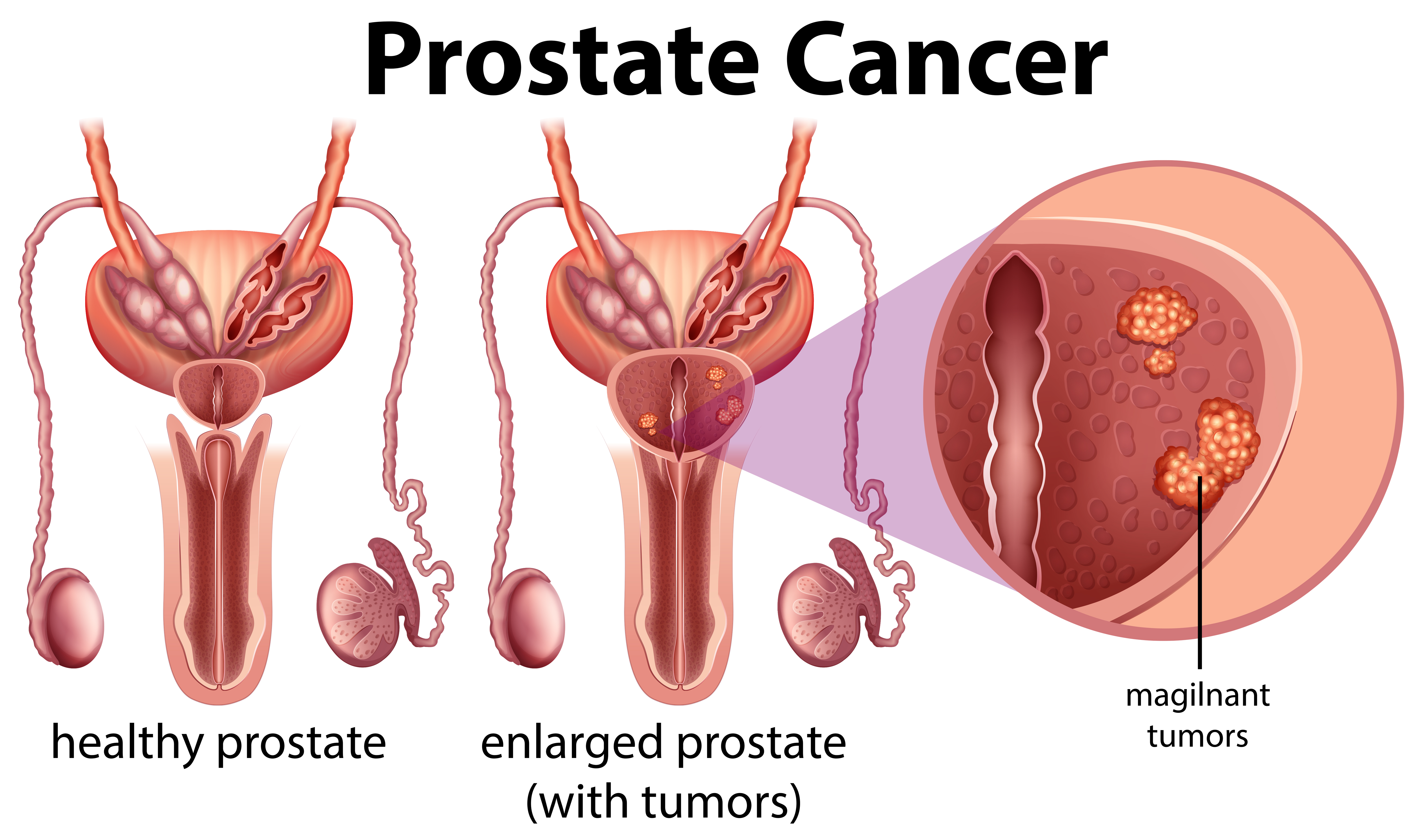
Prostate cancer is a type of cancer that occurs in the prostate, a small walnut-shaped gland located just below the bladder in men.
The prostate gland is responsible for producing some of the fluid that nourishes and transports sperm. Prostate cancer is one of the most common types of cancer in men.
The main types of prostate cancer are:

Here is an overview of the general procedure for dealing with prostate cancer:
Screening and Detection:
a. Prostate-Specific Antigen (PSA) Test: This blood test measures the level of PSA, a protein produced by the prostate. Elevated PSA levels may indicate a potential issue with the prostate.
b. Digital Rectal Exam (DRE): A physical examination in which a healthcare provider assesses the size and texture of the prostate by inserting a gloved finger into the rectum.
Diagnostic Procedures: Biopsy: If the PSA levels are elevated or if abnormalities are found during a DRE, a biopsy may be performed. During a biopsy, small tissue samples are taken from the prostate using a thin needle. The samples are then examined under a microscope to determine if cancer is present and to assess its characteristics.
Gleason Score and Staging: The Gleason score is assigned based on the microscopic appearance of the prostate cancer cells. It helps predict the aggressiveness of the cancer.
Staging involves determining the extent of the cancer, including whether it is localized to the prostate or has spread to nearby tissues or distant organs. Staging is typically done using imaging studies such as MRI, CT scans, and bone scans.
Treatment Options: The choice of treatment depends on various factors, including the stage and grade of the cancer, the overall health of the patient, and patient preferences.
a. Active Surveillance: Monitoring the cancer closely without immediate treatment.
b. Surgery: Removal of the prostate gland (prostatectomy).
c. Radiation Therapy: Using high-energy rays to target and kill cancer cells.
d. Hormone Therapy: Suppressing the production of hormones (like testosterone) that fuel the growth of prostate cancer cells.
e. Chemotherapy: Using drugs to kill cancer cells.
f. Immunotherapy: Stimulating the body's immune system to fight cancer cells.
Follow-Up and Monitoring: Regular follow-up visits are scheduled to monitor the patient's condition, assess the effectiveness of treatment, and manage any side effects. PSA tests and imaging studies may be conducted to track the progression of the disease.
India has become a popular destination for Prostate Cancer due to its world-class medical facilities, experienced surgeons, and lower costs compared to other countries. Indian hospitals have state-of-the-art technology and equipment and offer excellent healthcare services at an affordable price. Patients from around the world can benefit from the cost-effective and high-quality healthcare services offered in India.
Gomedi9 is a medical tourism company that specializes in helping patients plan and organize their medical travel to India. They provide a range of services to make the process of medical tourism hassle-free and convenient for patients.
Gomedi9 can help patients to choose the right hospital, book accommodation, arrange transportation, provide interpreters, and ensure that the patient receives the best possible medical treatment at an affordable price. They have a team of experienced professionals who guide patients throughout the process of medical tourism, from the initial consultation to post-operative care.
