

Welcome guest
Monday to Friday8AM - 9PM
AddressABC A-504, Rajnigandha Apartment, VADODARA-390007, GUJARAT, India.
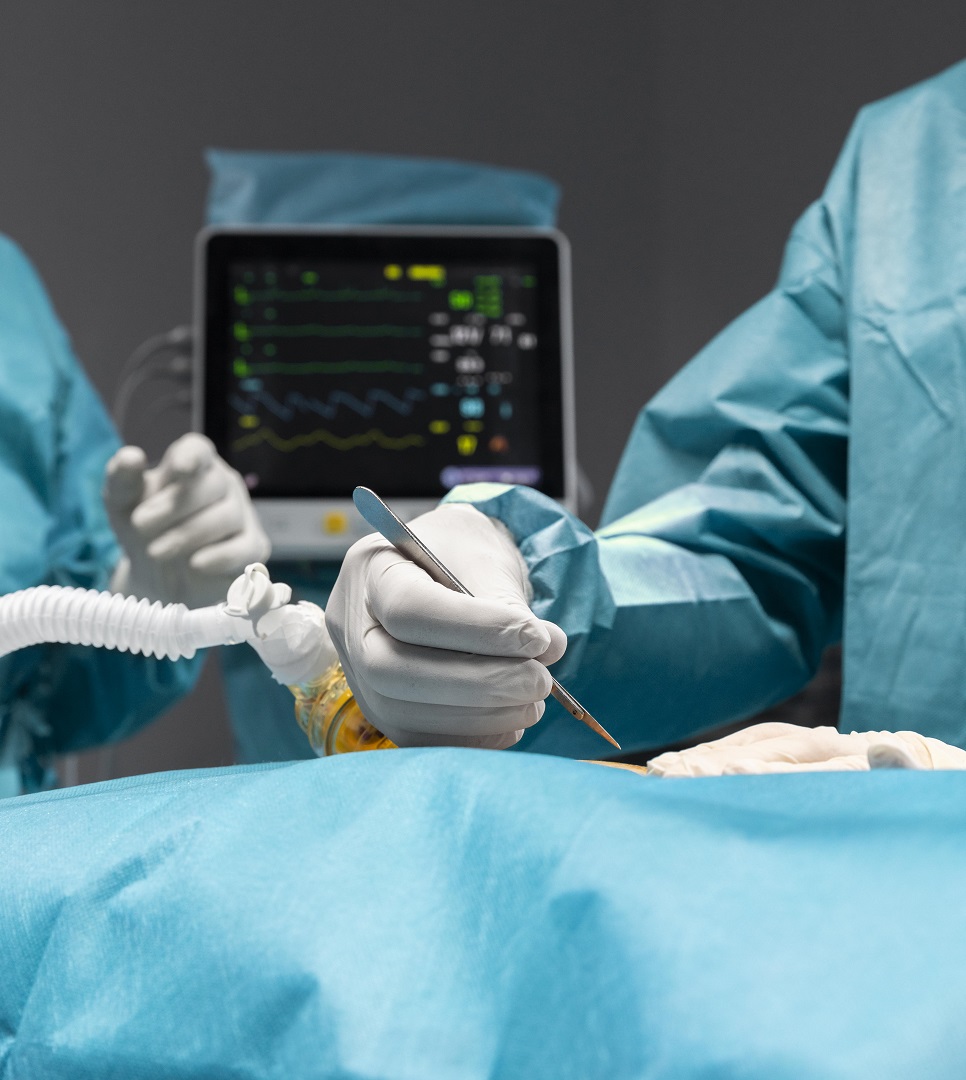
Spleen removal surgery is a surgical procedure in which the spleen is partially or completely removed from the body.
The spleen is an organ located beneath the ribcage on the left side of the abdomen. It plays a role in various functions, including filtering the blood, storing platelets, and assisting the immune system in fighting infections. Spleen removal surgery, or splenectomy, can be performed using different surgical techniques, depending on the patient's condition, the surgeon's preference, and the specific circumstances.
The two primary types of spleen removal surgery are:

Here's an overview of the general steps involved in the surgical removal of the spleen:
Open Splenectomy Procedure:
Medical Evaluation: The patient is evaluated through physical exams, blood tests, and imaging studies to determine the need for a splenectomy and assess their overall health.
Anesthesia: The patient is administered general anesthesia to ensure they are unconscious and pain-free during the surgery.
Incision: In open surgery, a single large incision is made in the upper left abdomen, just beneath the ribcage.
Spleen Exposure: The surgeon carefully moves surrounding organs to expose the spleen.
Spleen Removal: The blood vessels supplying the spleen are identified, clamped, and cut. The surgeon detaches the spleen from its attachments and surrounding tissues.
Specimen Removal: The spleen is then removed from the body, and any bleeding is controlled.
Closure: The surgeon closes the incision with sutures or staples, and dressings or adhesive strips may be used to cover the wound.
Laparoscopic or Robotic-Assisted Splenectomy Procedure:
Medical Evaluation: The patient is evaluated through physical exams, blood tests, and imaging studies to determine the need for a splenectomy and assess their overall health.
Anesthesia: The patient is administered general anesthesia to ensure they are unconscious and pain-free during the surgery.
Incisions: Multiple small incisions (usually 3-4) are made in the abdomen to accommodate surgical instruments and a laparoscope.
Gas Insufflation: Carbon dioxide gas is introduced into the abdomen to create a working space.
Spleen Exposure: The laparoscope, connected to a video monitor, provides visualization of the surgical field. The surgeon inserts specialized instruments through the other incisions to manipulate and remove the spleen.
Spleen Removal: The surgeon uses the instruments to dissect, cut, and detach the spleen from its attachments, while monitoring the procedure through the laparoscope.
Specimen Removal: The fragmented spleen is removed through one of the small incisions, or it may be placed in a retrieval bag for extraction.
Closure: The small incisions are closed with sutures or adhesive strips, and the gas is released from the abdomen.
Post-Procedure:
Recovery and Monitoring: After the spleen removal, the patient is closely monitored in a recovery area. They may need to stay in the hospital for a period of time, depending on the type of surgery and their condition.
Vaccinations: Patients who undergo splenectomy are typically given vaccinations to help protect against certain bacterial infections, as the spleen plays a role in the immune system.
Follow-up Care: Post-operative care includes follow-up appointments to monitor the patient's progress, manage pain, and address any potential complications.
India has become a popular destination for Spleen Removal Surgery due to its world-class medical facilities, experienced surgeons, and lower costs compared to other countries. Indian hospitals have state-of-the-art technology and equipment and offer excellent healthcare services at an affordable price. Patients from around the world can benefit from the cost-effective and high-quality healthcare services offered in India.
Gomedi9 is a medical tourism company that specializes in helping patients plan and organize their medical travel to India. They provide a range of services to make the process of medical tourism hassle-free and convenient for patients.
Gomedi9 can help patients to choose the right hospital, book accommodation, arrange transportation, provide interpreters, and ensure that the patient receives the best possible medical treatment at an affordable price. They have a team of experienced professionals who guide patients throughout the process of medical tourism, from the initial consultation to post-operative care.
