

Welcome guest
Monday to Friday8AM - 9PM
AddressABC A-504, Rajnigandha Apartment, VADODARA-390007, GUJARAT, India.

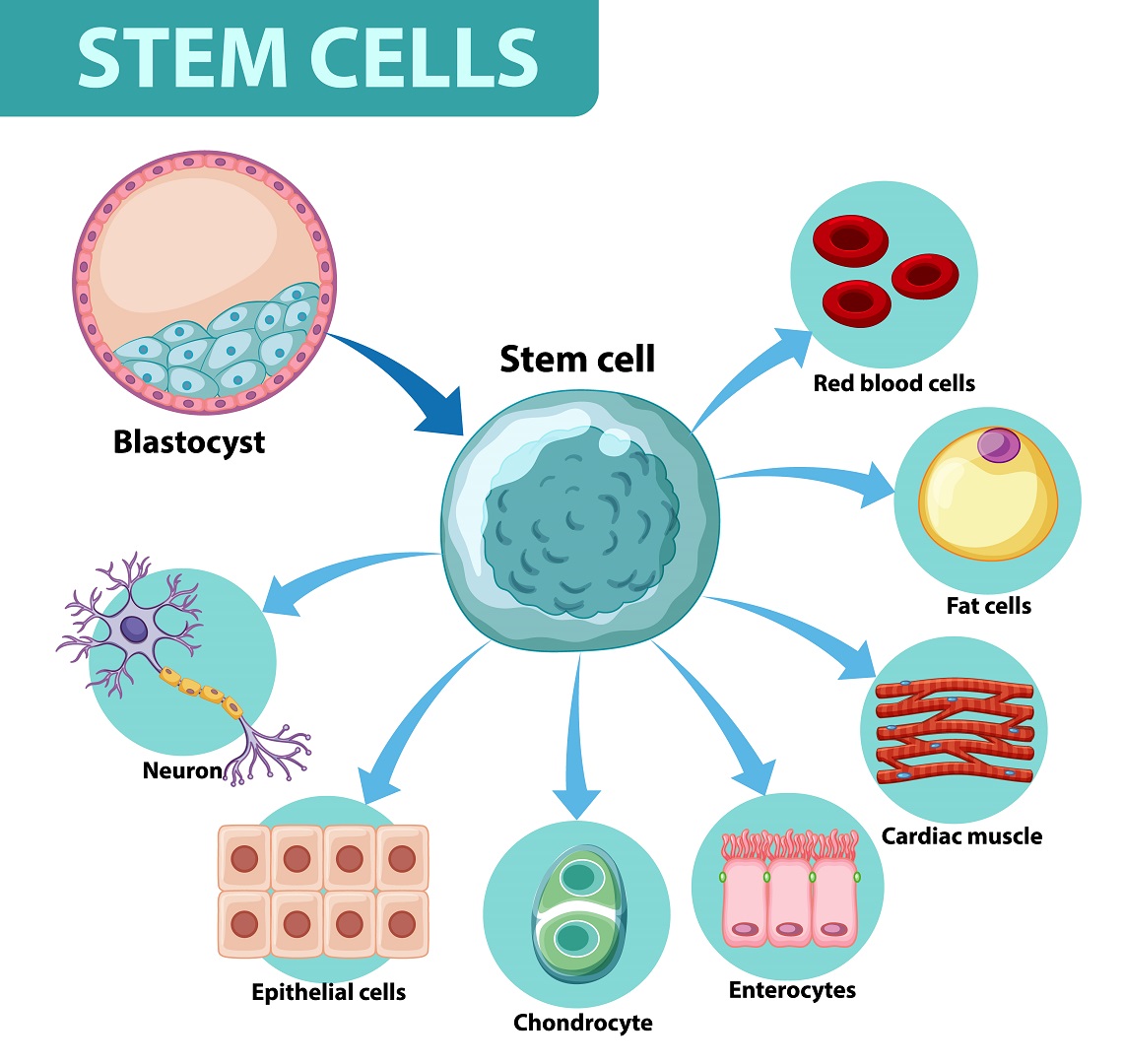
Stem cells have the capacity for self-renewal, meaning they can divide and produce both identical stem cells (maintaining the stem cell population) and differentiated cells with specific functions. Stem cells play a crucial role in development, tissue repair, and regeneration.
Stem cells can be broadly classified into two main types based on their origin and developmental potential:
Following are the procedure steps:
Isolation of Stem Cells:
a. Embryonic Stem Cells (ESCs): Derived from the inner cell mass of a developing embryo, typically obtained during the blastocyst stage.
b. Adult (Somatic) Stem Cells: Isolated from various tissues, such as bone marrow, adipose tissue, or neural tissue, using specific isolation techniques.
Expansion and Culturing: Stem cells are often cultured and expanded in vitro to increase their numbers before use in medical treatments or research.
Differentiation (if needed): In some cases, stem cells may be guided to differentiate into specific cell types based on the intended therapeutic application.
This can be done through the manipulation of culture conditions or by introducing specific growth factors and signaling molecules.
Preparation for Administration: Stem cells are prepared for administration, whether by injection, transplantation, or another delivery method suitable for the targeted tissue or organ.
Administration or Implantation: Stem cells are introduced into the patient's body. The method of administration depends on the specific medical application. For example:
a. Injections: Direct injection into the affected area (e.g., joints, heart muscle, spinal cord).
b. Transplantation: Surgical implantation of stem cells into tissues or organs (e.g., bone marrow transplant).
Monitoring and Follow-up: Patients are monitored to assess the safety and effectiveness of the stem cell treatment. Follow-up assessments may be conducted to track changes in the patient's condition and the integration of stem cells into the target tissue.
India has become a popular destination for Stem Cell due to its world-class medical facilities, experienced surgeons, and lower costs compared to other countries. Indian hospitals have state-of-the-art technology and equipment and offer excellent healthcare services at an affordable price. Patients from around the world can benefit from the cost-effective and high-quality healthcare services offered in India.
Gomedi9 is a medical tourism company that specializes in helping patients plan and organize their medical travel to India. They provide a range of services to make the process of medical tourism hassle-free and convenient for patients.
Gomedi9 can help patients to choose the right hospital, book accommodation, arrange transportation, provide interpreters, and ensure that the patient receives the best possible medical treatment at an affordable price. They have a team of experienced professionals who guide patients throughout the process of medical tourism, from the initial consultation to post-operative care.
